
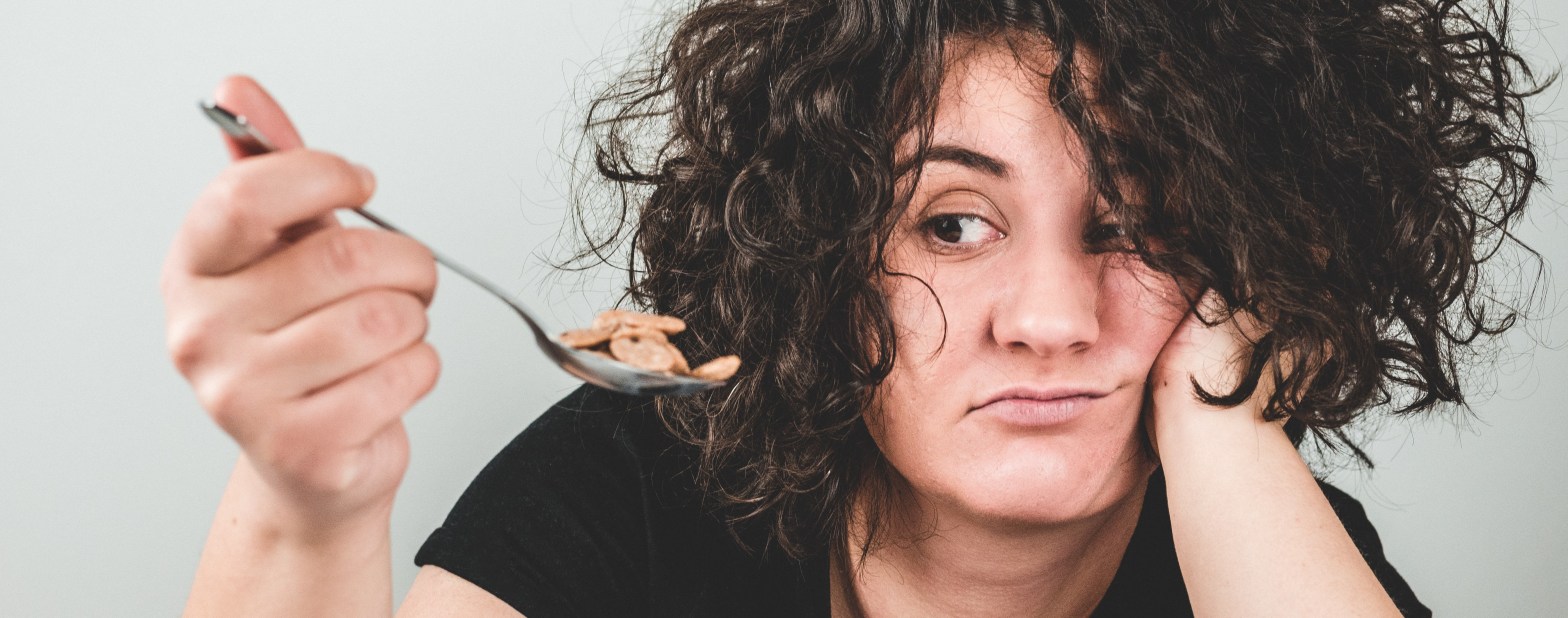
New research has shown that 22% of children and teens, globally, are disordered eaters (1). For many of the people I work with, a disordered relationship with food starts in early years. However, because disordered eating is so normalised in society, some people may not even realise that their relationship with food is disordered.
”Up to 3 out of every 4 women have disordered eating behaviours.”
As you get older, your risk of disordered eating increases. A survey revealed that up to 3 out of every 4 women have disordered eating behaviours (2). Disordered eating is everywhere, it’s normalised. Read on to figure out if you may have a disordered relationship with food.
Disordered eating relates to food and eating behaviours which do not meet criteria for an eating disorder but can still negatively impact you physical, mental or emotional wellbeing. The Continuum of Eating below shows the relationship between eating disorders, disordered eating and normative or intuitive eating (3).
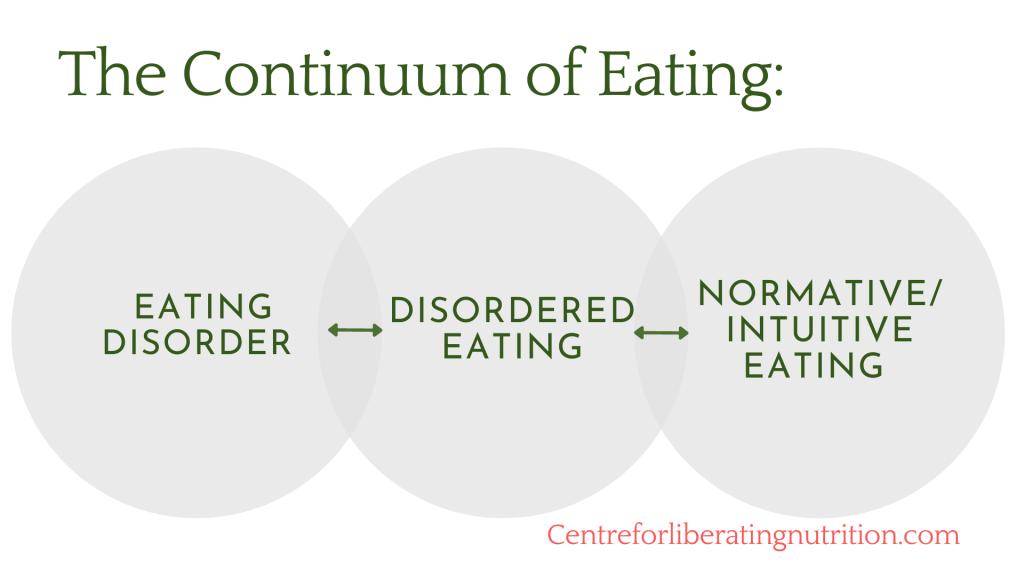
On one end of the spectrum lie diagnosable eating disorders with clearly defined criteria. On the other end of the spectrum is someone who is an intuitive eater. This is a person who doesn’t engage in any food rules, restriction or dieting behaviours and trusts their body to communicate to them what, when and how much to eat. Disordered eating is everything in between.
Examples of disordered eating include (but is certainly not limited to!):
- Going on a diet e.g. intermittent fasting, keto or 5:2
- Categorising foods or eating behaviours as ‘good’ or ‘bad’ or things you ‘should’ or ‘shouldn’t’ do
- Feeling guilt or shame when breaking food rules
- Tracking what you eat e.g. calorie and macro counting
- Restricting the amount of food you eat
- ‘Compensating’ for what you eat e.g. through exercise or having a ‘healthier’ meal later
It’s important not to underestimate the impact that a poor relationship with food or your body might be having on your day-to-day life. Disordered Eating can make you feel like you don’t know how to eat ‘right’, that you are doing something ‘wrong’. It can increase the amount of time you spend thinking about food and your body and stop you from getting a much needed cake and a cuppa with friends. Disordered Eating can cause you to eat secretly or feel ashamed about your eating patterns. It can make you feel frustrated that your child wants to have McDonald’s for their birthday meal because you’re not sure if it will fit into your new plan. Disordered eating can leave you feeling exhausted, isolated and down.
If you think you may experience disordered Eating please know that you are not alone and you are deserving of support. If you are curious about what a healthy relationship with food might look like, feel free to check out the FREE ‘Road to Intuitive Eating’ Workbook.
References
- Lopez-Gil et al. (2023) Global proportion of disordered eating in children and adolescents: A systematic review and meta-analysis
- UNC school of Medicine [cited 27/02/2023]; https://uncnewsarchive.unc.edu/2008/04/22/survey-finds-disordered-eating-behaviors-among-three-out-of-four-american-women-2/
- Laura Thomas (2018) Just Eat It
Start your Food and Body Liberation journey today.
With Centre for Liberating Nutrition
© Centre for Liberating Nutrition 2023 | All Rights Reserved
aoife@centreforliberatingnutrition.com
 centreforliberatingnutrition.com